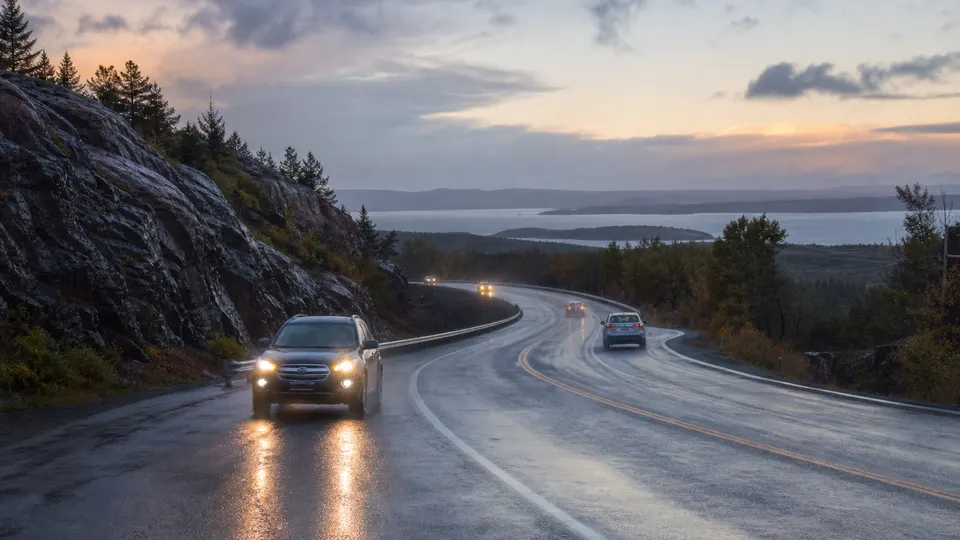
If you have ever moved from Toronto to Vancouver or traded a Calgary commute for a Mississauga one, you already know: auto insurance in Canada is not one national product. It is three different regulatory worlds that happen to share a border.
This comparison focuses on Ontario, British Columbia, and Alberta — the three provinces where most interprovincial migrants land, and where premium debates dominate provincial politics.
We are not ranking provinces for sport. Each system makes trade-offs between affordability, choice, fraud prevention, and claim fairness. Your job as a driver is to understand which levers exist in your province — and which do not.
System architecture at a glance
Before diving into dollars, understand who sets the rules and who sells the policy.
| Factor | Ontario | British Columbia | Alberta |
|---|---|---|---|
| Market structure | Private insurers; FSRA regulates | ICBC basic mandatory; optional from ICBC or private | Private market; APRA regulates |
| Mandatory minimum | Third-party liability, accident benefits, DCPD, uninsured auto | Basic Autoplan through ICBC | Third-party liability, accident benefits |
| Who sets base rates | Insurers file with regulator | ICBC basic rates set provincially | Insurers compete; reforms since 2022 |
| Tort vs no-fault elements | Hybrid; accident benefits with lawsuit thresholds | No-fault for minor injuries under basic | Hybrid; direct compensation for property damage |
| Typical buying path | Broker, agent, or direct online | ICBC Autoplan broker | Broker, agent, or direct online |
None of these rows tell you your personal premium. They tell you where to aim your questions when a quote looks high or a denial seems unfair.
Ontario: high premiums and complex accident benefits
Ontario consistently reports among the highest average auto premiums in Canada. Multiple factors converge: dense urban corridors, fraud and staged-accident concerns, generous accident-benefits history, and repair costs tied to advanced vehicle technology.
Key Ontario concepts for 2026 shoppers:
- Direct Compensation-Property Damage (DCPD): Your insurer pays for your vehicle damage when you are not at fault, based on fault determination rules.
- Accident benefits: Medical, rehabilitation, attendant care, and income replacement — limits and optional buy-ups matter after serious collisions.
- Third-party liability: $200,000 statutory minimum remains, but most brokers recommend $1–2 million given litigation exposure.
- Optional coverages: Collision, comprehensive, rental car, waiver of depreciation on new vehicles, and OPCF endorsements that modify standard wordings.
Ontario drivers in the Greater Toronto and Hamilton Area often see the steepest premiums. Moving to a smaller centre may reduce rates, but insurers also weigh garaging address, annual kilometres, and commuting patterns. Remote work declarations must be accurate — misrepresentation can void claims.
"I moved from Ottawa to Brampton and my premium nearly doubled with the same car and clean record. Postal code turned out to be a bigger factor than the ticket I never got." — Policyholder survey response, Insurance Bureau of Canada consumer panel, 2025
British Columbia: ICBC and the optional layer
BC's system is unique. Basic insurance is sold through ICBC and delivered via Autoplan brokers. It covers third-party liability, accident benefits, underinsured motorist protection, and inverse liability in certain situations. You cannot buy basic coverage from a private competitor.
Many BC drivers add optional coverage — collision, comprehensive, higher liability tops-ups — either through ICBC or private insurers. That dual layer confuses newcomers who expect one bill and one claims phone number.
BC-specific considerations:
- Driver-based model: Premiums increasingly follow the driver, not only the vehicle. Households with multiple drivers should list everyone who may operate the car.
- Rate classes and discounts: Experience, claims-free years, and usage-based programs affect pricing.
- Minor injury cap: Disputes over injury definition and care costs continue to shape politics and legal challenges.
- Electric vehicles: Repair costs and battery risk influence comprehensive pricing in urban BC markets.
Metro Vancouver premiums reflect theft risk, collision frequency, and property values. Interior BC communities face different theft profiles but may see higher wildlife collision claims.
Alberta: competition returns to the market
Alberta reformed its auto insurance framework to expand private-market flexibility and introduce new product options, including limited no-fault care benefits for minor injuries alongside continued tort rights for many scenarios. The goal was to moderate premium growth while preserving consumer choice.
Alberta drivers in 2026 should understand:
- Grid rating: New drivers and drivers with poor records may face minimum premium floors under the grid system.
- DCPD: Similar in spirit to Ontario — not-at-fault property damage handled through your insurer.
- Shopping matters again: More insurers actively competing can mean spreads of hundreds of dollars for identical profiles — but only if you compare.
- Hail capital: Comprehensive claims in Calgary and surrounding areas are common; deductibles should be chosen with weather reality in mind.
Rural Alberta driving patterns — long highway kilometres, gravel roads, wildlife — belong on your application. Underestimating annual distance is a frequent reason for claim complications.
Side-by-side: what actually moves your premium
Regulatory structure sets the stage; personal rating factors write the script. Across all three provinces, insurers and public insurers weigh overlapping variables:
| Rating factor | Typical impact | Notes by province |
|---|---|---|
| Driving record | High | Convictions and at-fault claims linger years; rules differ on how long |
| Vehicle make/model | High | Theft targets and repair costs hurt in ON and AB cities |
| Postal code / territory | High | Especially pronounced in GTA and Metro Vancouver |
| Age and experience | Medium to high | Grid effects in Alberta for high-risk profiles |
| Annual kilometres | Medium | Underreporting is a coverage risk everywhere |
| Coverage limits and deductibles | Medium | Higher deductibles lower premium but raise out-of-pocket risk |
| Credit-based insurance score | Varies | Permitted in Alberta; not used in BC basic rates |
Interprovincial moves: timing your switch
Moving between these provinces triggers more than a licence exchange. Auto insurance must align with provincial registration. A common mistake is cancelling Ontario coverage before Alberta registration completes, leaving a gap that insurers treat as continuous-coverage breaks.
Practical migration checklist:
- Obtain new provincial licence and registration within required deadlines.
- Get quotes before you move if possible — some brokers can pre-quote garaging address.
- Ask whether claims history transfers or whether you need letters of experience.
- Review optional coverages fresh — OPCF equivalents do not exist in BC; BC optional wordings differ in Alberta.
- Update lienholder and lessor notifications if you lease or finance.
Students and snowbirds have additional wrinkles. A car garaged at a parent's Ontario address while attending university in Alberta needs honest disclosure about primary use location.
Claims and disputes: three complaint paths
When settlement stalls, provincial ombuds and regulators differ:
- Ontario: FSRA oversees market conduct; consumers can escalate through company complaints officers and the General Insurance OmbudService (GIO).
- BC: ICBC disputes follow internal review processes; private optional insurers have separate complaint routes; the BC utilities regulator plays a role in basic rate oversight.
- Alberta: APRA handles insurer conduct; the Alberta Insurance Council oversees broker licensing and discipline.
Document every call. Keep repair estimates, medical assessments, and rental receipts organized from day one.
Cost illustrations — not quotes
Premiums change monthly. The figures below are illustrative composites for discussion with a broker, not offers of insurance. A 35-year-old driver with twelve years experience, clean record, commuting 12 km each way in a 2021 Honda CR-V might see annual totals roughly in these bands in early 2026:
- Greater Toronto Area (Ontario): $2,400–$3,200 with $1,000 deductibles and standard liability
- Metro Vancouver (BC): $1,900–$2,600 combining basic and typical optional package
- Calgary (Alberta): $1,700–$2,400 depending on insurer and hail deductible choices
A 20-year-old principal driver on the same vehicle can double or triple those ranges in any province. That is why family insurance strategies — driver assignment, telematics trials, and driver training discounts — matter as much as provincial politics.
"The cheapest policy is not the one with the lowest premium today. It is the one that still covers you after the collision you have not had yet." — Independent broker, Alberta Motor Association panel discussion, 2025
Technology, telematics, and privacy
Usage-based insurance programs — mobile apps or plug-in devices tracking acceleration, braking, and mileage — offer discounts in Ontario and Alberta private markets. BC has explored usage-linked concepts within its pricing reforms. Before enrolling, read data retention policies and whether participation is reversible without penalty.
How to shop without regret
Whether you are in a fully private province or blending ICBC basic with private optional, align quotes on identical coverage before comparing price. A $200 cheaper premium with a $2,000 higher deductible or stripped accident benefits is not savings — it is risk transfer.
Questions worth asking every provider:
- What accident benefit limits apply and what optional increases are available?
- Is rental vehicle coverage included and for how many days?
- How are not-at-fault claims treated for renewal pricing?
- What happens if I lend my vehicle to a friend for a weekend?
- Are aftermarket modifications covered?
Auto insurance will remain a provincial story in Canada for the foreseeable future. Understanding Ontario's complexity, BC's public-private split, and Alberta's competitive reset gives you a map — even when the road itself keeps changing.
Map your needs
Sponsored article with partner links. Prices and terms may vary. This content is not professional advice.