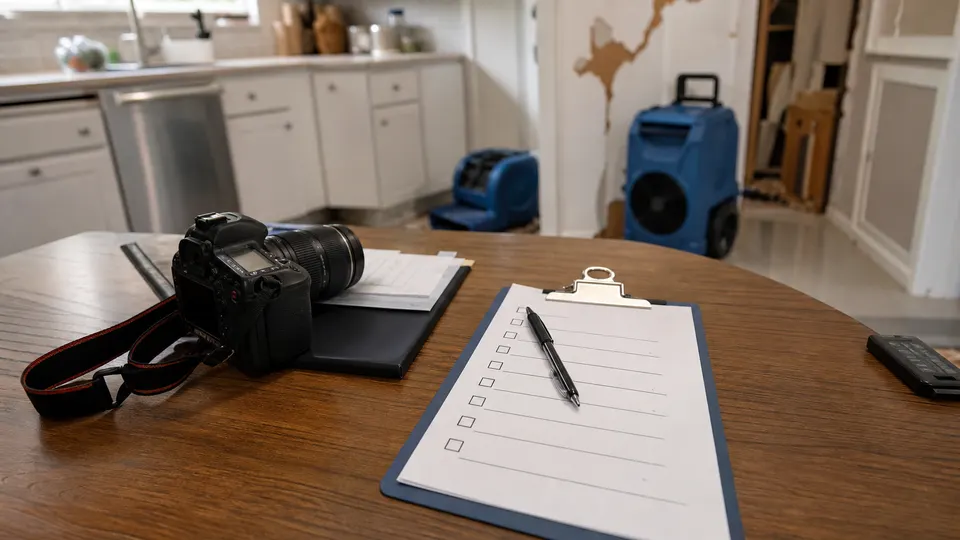
After a burst pipe, vehicle collision, or theft, policyholders enter an administrative process measured in forms, photos, and phone tags. Adjusters are not adversaries — they need evidence to apply policy wordings fairly. Incomplete documentation slows payment while insurers request supplements, engineers revisit sites, and contents settlements stall over missing serial numbers. Organized records from minute one compress timelines and reduce settlement disputes.
Documentation habits before loss — home inventories, maintenance logs — pay dividends after loss. This guide covers both proactive preparation and emergency capture.
Immediate aftermath: universal steps
- Safety first: Do not enter unstable structures or confront intruders.
- Mitigate damage: Shut off water main, tarp roof holes, move valuables from standing water — policies require reasonable emergency steps.
- Photograph and video: Wide shots and close-ups with timestamps before cleanup.
- Report promptly: Notify insurer within policy timeframes; police report for theft and vandalism.
- Log every contact: Adjuster name, date, promise, reference number.
Home and tenant claims documentation
- Room-by-room damage photos including serial numbers on appliances.
- Contractor emergency mitigation invoices — drying equipment, board-up.
- Contents list with age, purchase price, replacement source links where possible.
- Prior photos from home inventory showing undamaged state.
- Correspondence with landlord or condo corporation on shared losses.
Auto claims documentation
- Scene photos: vehicle positions, plate numbers, road conditions, skid marks.
- Witness names and phone numbers independent of other party.
- Police report number for injuries or significant damage provinces require reporting.
- Repair estimates from two licensed shops if insurer allows choice.
- Dashcam footage preserved immediately — loops overwrite.
| Document type | Home claim use | Auto claim use |
|---|---|---|
| Timestamped photos | Damage extent, mould progression prevention | Fault determination, damage scope |
| Police report | Theft, arson suspicion | Injury collisions, hit-and-run |
| Receipts/invoices | Contents replacement, mitigation | Towing, rental car, repairs |
| Expert reports | Engineer on structural, hygienist on mould | Appraiser on total loss valuation |
| Medical records | Guest liability injuries on property | Accident benefits injury claims |
Contents inventory before loss
Walk through home annually recording video with narration of major items. Store cloud copies outside home — Google Drive, iCloud. Attach receipts for electronics and jewellery. Spreadsheet columns: item, room, purchase date, cost, serial number.
Digital hygiene
Email yourself adjuster commitments during calls. Upload insurer portal documents in PDF not blurry phone photos of documents. Label files: 2026-01-15_kitchen_water_damage_estimate.pdf.
What slows claims unnecessarily
- Discarding damaged items before adjuster inspection without photo documentation.
- Starting permanent repairs before scope agreed — except emergency mitigation.
- Inconsistent statements about timeline or cause across insurer and police.
- Missing proof of ownership for high-value theft claims.
"The adjuster said our claim cleared in eleven days because we had a video inventory from two years ago. Neighbour same loss took three months proving contents." — Tenant, Winnipeg, 2025
Independent adjusters vs staff adjusters
Insurers assign staff or independent adjusters — documentation standards identical. Contractor estimates should itemize labour and materials matching insurer software formats where possible — Xactimate familiarity speeds property claims.
Disputes and supplements
Hidden damage discovered during repairs warrants supplement requests with new photos and contractor revision. Document discovery date and structural access justification.
Keep records after closure
Store claim file seven years — tax and recovery subrogation issues may resurrect. Proof of repairs maintains resale disclosure integrity.
Documentation is the language of claims. Speak it fluently before disaster — and the process rewards you with faster, fuller settlements aligned with policy promises.