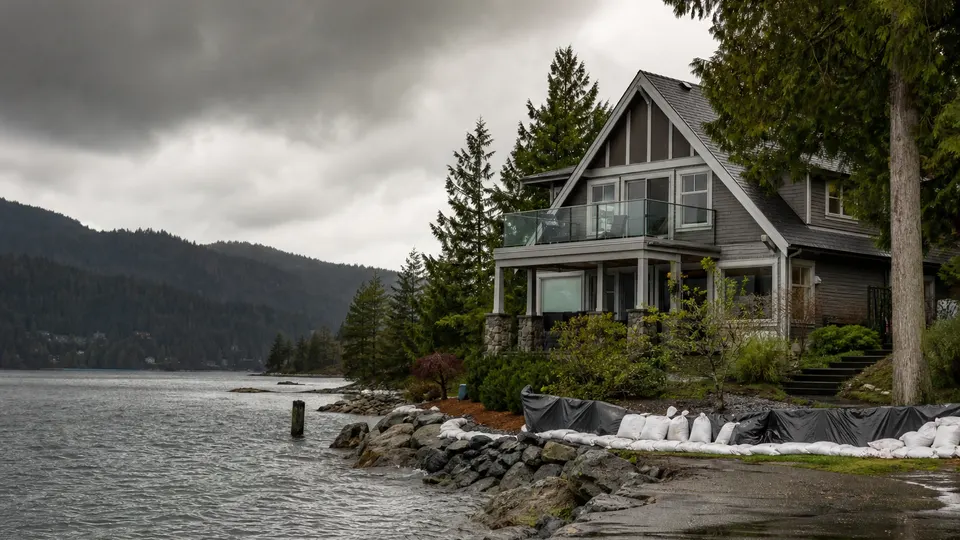
British Columbia combines mountainous terrain, coastal exposure, and river valleys dense with housing. When atmospheric rivers deliver days of rain — as they did during recent November events — saturated ground, overwhelmed storm drains, and rising rivers produce flood damage that standard home insurance policies exclude by default. BC homeowners who assume fire and theft coverage includes flood learn otherwise when basement furnaces sit underwater and adjusters cite the overland water exclusion.
Flood risk in BC is not limited to rural floodplains. Urban neighbourhoods in Abbotsford, Chilliwack, Merritt, and parts of Metro Vancouver have seen overland inundation far from traditional mapped zones. Climate-driven precipitation intensity increases the relevance of optional water coverages and provincial disaster assistance programs that fill gaps insurance markets will not.
What standard BC home policies cover
Typical comprehensive home policies insure fire, windstorm, hail, theft, vandalism, and sudden escape of water from plumbing or appliances. They exclude flood — defined as water entering from outside at ground level or through foundations — unless you purchase overland water coverage as an endorsement where available.
- Sewer backup: Separate endorsement; covers wastewater entering through drains when municipal systems overload.
- Overland water: Covers fresh water flood from heavy rain, melting snow, or overflow of bodies of water — subject to eligibility and limits.
- Groundwater seepage: Often excluded or limited; gradual infiltration through foundations is maintenance-related in insurer view.
Atmospheric rivers and changing loss patterns
BC's geography channels Pacific moisture into narrow river systems. When storms stall, rainfall totals exceed drainage design capacity within hours. November 2021 events demonstrated how quickly highways wash out and farmland floods, displacing thousands. Insurance claims from sewer backup surged in lower Mainland communities; overland water claims followed where endorsements existed.
Insurers reassess eligibility after major events. Properties in repeatedly flooded areas may face declination for overland water, higher deductibles, or sub-limits. Government disaster financial assistance programs may become the primary recovery path when insurance is unavailable.
Provincial disaster assistance vs insurance
BC's Disaster Financial Assistance program helps uninsurable disaster losses for eligible residents — but it is not a substitute for insurance. DFA typically excludes losses for which insurance was available and not purchased. Documenting why overland water was unavailable from your insurer supports DFA applications when events qualify.
Federal programs and provincial top-ups evolve after major disasters. Rely on insurance first where you can buy it; treat government assistance as catastrophic backstop, not planning assumption.
| Water source | Typical coverage path | BC-specific note |
|---|---|---|
| Broken interior pipe | Standard policy sudden escape | Common winter and renovation claim |
| Sewer/drain backup | Sewer backup endorsement | Frequent during atmospheric river storms |
| Overland river/rain flood | Overland water endorsement | Eligibility varies by address and loss history |
| Coastal storm surge | Often limited or excluded | Low-lying Vancouver Island and Delta areas |
| Tsunami | Generally excluded | Separate catastrophe frameworks |
Fraser Valley and interior community exposure
Abbotsford and Chilliwack sit on fertile floodplain agriculture converted to residential and commercial use. Diking and pump systems reduce but do not eliminate risk. Interior communities along the Thompson and Nicola rivers face spring freshet flooding when snowpack melts rapidly. Homebuyers should request flood history disclosure, consult municipal hazard maps, and quote insurance before removing subjects on purchase — not after moving in.
Strata and condo considerations
Strata corporations insure common property; unit owners carry strata policies for contents and improvements. Overland water entering through ground-level parking or lobby areas triggers master policy claims with corporation deductibles potentially assessed to owners. Strata deductibles in BC have risen; unit owner policies should include strata deductible assessment coverage aligned with current master policy terms.
Mitigation that insurers notice
Backwater valves on sewer lines, sump pumps with battery backup, proper grading away from foundations, and elevation of mechanical systems reduce loss severity. Some insurers offer premium credits for documented mitigation; all adjusters note lack of mitigation when investigating repeated claims.
"We never bought overland water because we are not on a river. The storm drain failed and our basement filled from the street. Standard policy paid nothing." — Homeowner, Fraser Valley, 2025
First Nations and remote community challenges
Insurance availability and infrastructure resilience vary across BC, including on reserve lands where insurance markets and government programs intersect differently. Remote communities face longer restoration timelines and higher per-claim costs. Provincial and federal initiatives continue to address gaps; individual homeowners should work with brokers familiar with local availability.
Practical steps for BC homeowners
- Request overland water and sewer backup quotes even if you believe risk is low.
- Review municipal flood maps and seller disclosure before purchase.
- Install and maintain backwater valves where building code and insurer guidelines align.
- Photograph belongings and store records above potential water lines.
- Understand DFA eligibility criteria as backup, not primary planning.
Flood risk in British Columbia is geographic reality amplified by intense rainfall events. Home insurance responds only where endorsements and eligibility align — making water coverage decisions as important as earthquake preparedness discussions in coastal and southwestern BC.